
The Ultimate Guide to Cannondale Lefty Bike: Innovation in Mountain Biking
If you’re a cycling enthusiast looking for a bike that stands out from the crowd, the Cannondale Lefty bike might just be the game-changer you’ve been searching for. Known for its distinctive single-sided suspension fork, this innovative design has captured the attention of mountain bikers, gravel riders, and cross-country racers alike. In this comprehensive blog post, we’ll explore everything you need to know about the Cannondale Lefty bike, from its fascinating history and cutting-edge technology to popular models, pros and cons, maintenance tips, and real-user reviews. Whether you’re a seasoned rider or new to the world of off-road cycling, this guide will help you decide if a Cannondale Lefty bike is the right fit for your adventures.
A Brief History of the Cannondale Lefty Bike
The story of the Cannondale Lefty bike begins in the late 1990s when Cannondale, an American bicycle manufacturer founded in 1971, sought to revolutionize mountain bike suspension. Traditional forks with two legs were the norm, but Cannondale engineers envisioned a lighter, stiffer, and more efficient alternative. The result was the original Lefty fork, introduced in 1999 on models like the Scalpel and F-series bikes. This single-sided design eliminated one leg, reducing weight while maintaining structural integrity through advanced engineering.
Over the years, the Cannondale Lefty bike evolved significantly. Early versions used a telescoping design with needle bearings for smooth travel, but by 2018, Cannondale unveiled the Lefty Ocho – a single-crown, single-sided fork that brought modern updates like carbon fiber construction and improved damping. The Ocho, available in 27.5-inch and 29-inch wheel sizes with 100mm of travel, marked a pivotal moment, making the Cannondale Lefty bike even more appealing for cross-country (XC) racing and trail riding. Today, the Lefty system is featured on various Cannondale models, blending heritage with contemporary performance.
Understanding the Design and Technology Behind Cannondale Lefty Bike
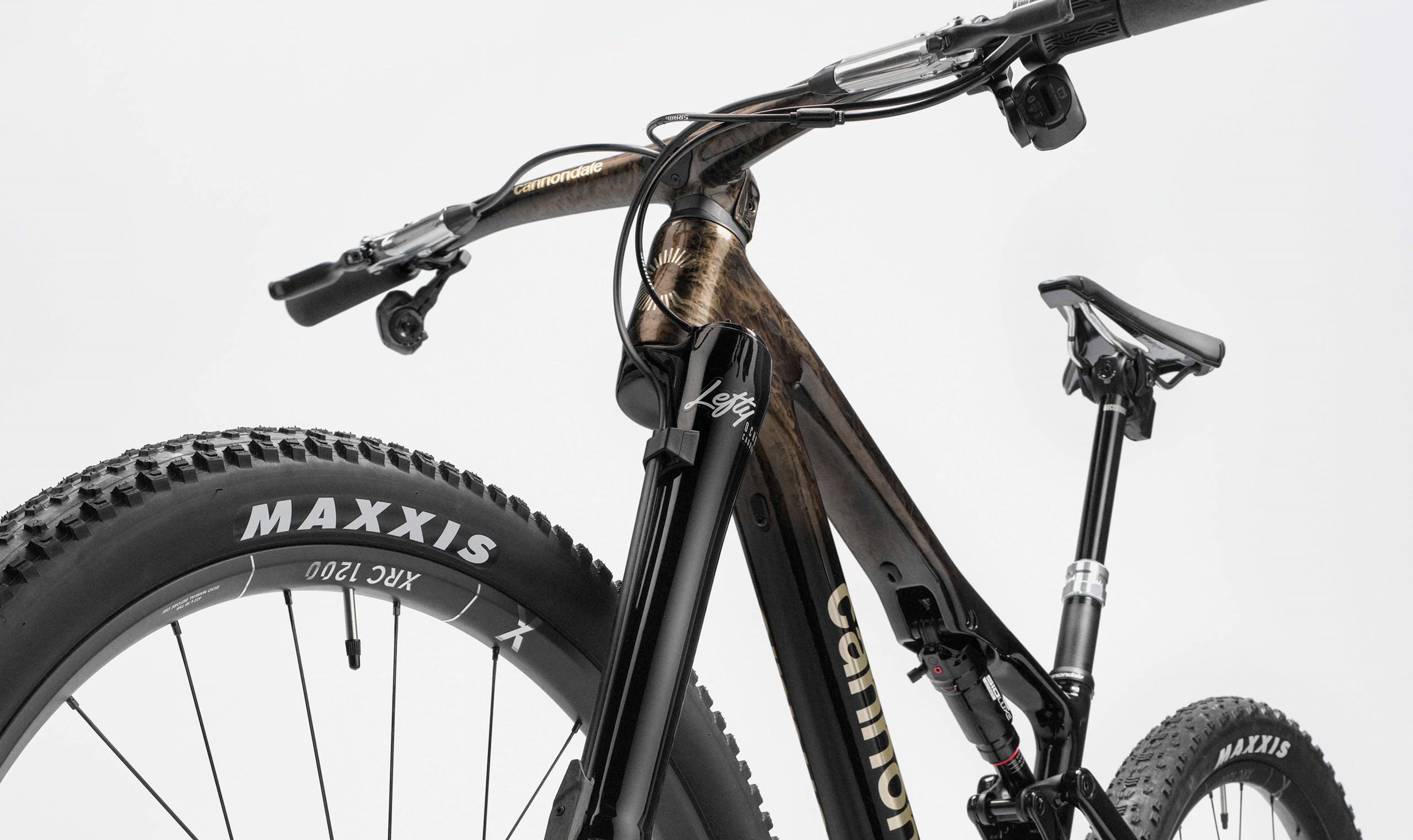
What sets the Cannondale Lefty bike apart is its proprietary Lefty fork technology. Unlike conventional forks, the Lefty uses a single leg on the left side (hence the name), supported by a robust hub and axle system. This design reduces unsprung weight, improves stiffness, and enhances tracking on rough terrain. Inside, the fork employs a series of needle bearings – up to 88 in some models – that roll rather than slide, minimizing friction for buttery-smooth suspension action.
Key features include:
- Inverted Design: The Lefty’s upside-down structure places the larger diameter tubes at the top for better rigidity.
- Delta Cage Technology: In models like the Lefty Ocho, this carbon fiber cage provides lateral stiffness without adding bulk.
- Adjustable Travel: Many Cannondale Lefty bikes offer 100mm to 130mm of travel, tunable via air pressure and rebound settings.
- Integration with Frames: Cannondale designs its frames specifically for the Lefty, ensuring optimal geometry and handling.
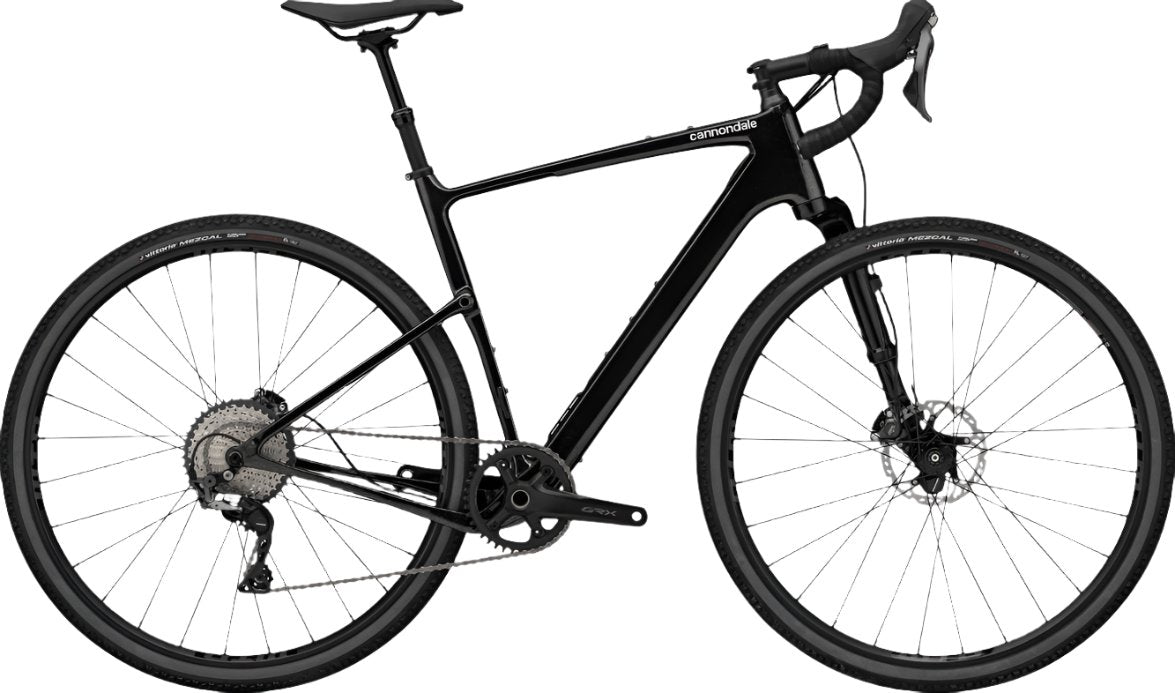
For gravel enthusiasts, models like the Topstone Carbon Lefty combine the fork with rear suspension for all-day comfort on mixed surfaces. The alloy version of the Ocho weighs about 1,735 grams, while the carbon variant shaves it down to 1,446 grams, making it one of the lightest XC forks available.

Popular Models of Cannondale Lefty Bike
Cannondale offers a range of bikes equipped with the Lefty fork, catering to different riding styles. Here are some standout models:
Cannondale Scalpel Series
The Scalpel is Cannondale’s flagship XC race bike, often featuring the Lefty Ocho. The Scalpel 1 Lefty, for instance, boasts a carbon frame, 120mm rear travel via FlexPivot technology, and modern geometry for aggressive descents. It’s ideal for competitive riders who prioritize speed and efficiency.
Cannondale F-Si
A hardtail option, the F-Si pairs the Lefty with a lightweight carbon frame for pure XC performance. Updated in 2018, it includes slacker head angles and longer reach for better stability on technical trails.
Cannondale Topstone Carbon Lefty
For gravel grinding, the Topstone Carbon 2 Lefty offers 30mm of rear Kingpin suspension alongside the Lefty fork. It’s equipped with Shimano GRX components for reliable shifting on varied terrain.
Cannondale Scalpel SE LTD Lefty
This trail-oriented version extends travel to 120mm front and rear, with high-end components like SRAM XX1 Eagle for downcountry adventures.
Each model showcases how the Cannondale Lefty bike adapts to specific needs, from racing to leisurely exploration.
Pros and Cons of Owning a Cannondale Lefty Bike
Like any specialized gear, the Cannondale Lefty bike has its strengths and weaknesses.
Pros:
- Lightweight and Stiff: The single-sided design saves weight and boosts torsional rigidity, leading to precise handling.
- Smooth Suspension: Needle bearings provide low-friction travel, reducing fatigue on long rides.
- Unique Aesthetics: It turns heads and sparks conversations at trailheads.
- Versatility: Suitable for XC, trail, and gravel, with options for different wheel sizes.
- Durability: Built to withstand abuse, with models like the Lefty Max offering longer travel (130-140mm) for rougher paths.
Cons:
- Proprietary Parts: Wheels and hubs must be Lefty-specific, limiting aftermarket options.
- Maintenance Complexity: Servicing requires specialized tools and knowledge; not every bike shop is equipped.
- Higher Cost: Premium technology means a steeper price tag, starting around $1,000 for the fork alone.
- Learning Curve: The asymmetric design might feel unusual at first for riders accustomed to traditional forks.
Overall, the pros often outweigh the cons for dedicated riders who value innovation.
Maintenance and Care for Your Cannondale Lefty Bike
To keep your Cannondale Lefty bike performing at its best, regular maintenance is key. Start with basic checks: Ensure the fork is clean and free of debris after rides. Cannondale recommends servicing the Lefty every 100 hours of use or annually, whichever comes first. This involves rebuilding the damper and replacing seals.
For DIY enthusiasts, tools like the Cannondale Lefty service kit are available, but professional help is advised for intricate tasks. Monitor air pressure (typically 80-120 PSI depending on rider weight) and rebound settings for optimal performance. Also, inspect the needle bearings for wear – they’re the heart of the system.
If you’re dealing with older models, note that longer-travel Lefty Max variants lack lockout features but include platform adjustments for climbing efficiency. Proper care extends the life of your Cannondale Lefty bike, ensuring it remains a reliable companion on the trails.

Real-User Reviews and Comparisons
Riders who’ve experienced the Cannondale Lefty bike often rave about its performance. One long-time user shared on YouTube that after years with RockShox and Fox forks, the Lefty’s smoothness is unmatched for XC racing. In forums, enthusiasts discuss model differences, noting how the SPV system in older Lefty Max forks provides adjustable platforms.
Comparisons to competitors like the Fox 32 or RockShox SID highlight the Lefty’s edge in weight savings and stiffness, though some prefer the familiarity of dual-leg designs. A first-ride review of the Scalpel 1 Lefty praised its modernized geometry for better stability on descents. Gravel riders appreciate the Topstone Lefty for its comfort on long hauls, blending road speed with off-road capability.

Why Choose a Cannondale Lefty Bike for Your Next Adventure?
In conclusion, the Cannondale Lefty bike represents a bold step in bicycle engineering, offering a unique blend of lightness, performance, and style. Whether you’re tackling XC races, exploring gravel paths, or hitting local trails, its innovative fork delivers an unparalleled riding experience. While it may require some adaptation and specialized maintenance, the rewards in handling and efficiency make it worthwhile for many cyclists.
If you’re considering adding a Cannondale Lefty bike to your garage, check out the latest models on Cannondale’s website or visit a local dealer for a test ride. With ongoing advancements, this iconic design continues to push the boundaries of what’s possible in mountain biking.

 English
  German